Seasonal perimeter insect defense creates a concentrated protective boundary around structural perimeters, intercepting ground-dwelling arthropods before they penetrate finished drywall or crawlspaces. In Denver,…
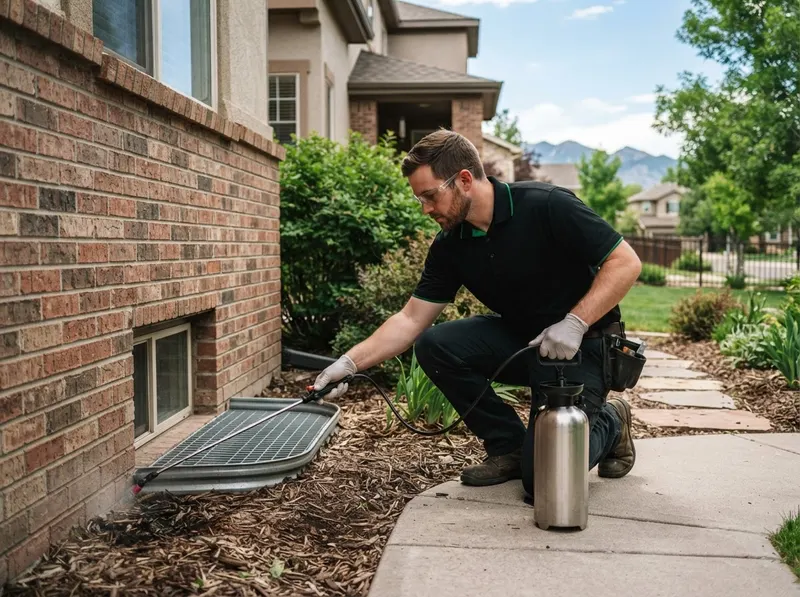
Seasonal perimeter insect defense creates a concentrated protective boundary around structural perimeters, intercepting ground-dwelling arthropods before they penetrate finished drywall or crawlspaces. In Denver, semi-arid altitude and sharp shifts in seasonal temperature drive insects toward structural foundations. Early spring moisture in neighborhoods like Washington Park and Sloan's Lake triggers heavy turf and pavement ant migrations into brick weep holes. Later in August and September, south-facing exposures on brick bungalows in Capitol Hill, Baker, and Five Points absorb heat that attracts massive aggregations of boxelder bugs and elm leaf beetles seeking structural voids for overwintering. Store-bought retail sprays break down rapidly under Denver's intense 5,280-foot high-UV index; professional microencapsulated formulations adhere firmly to red brick, sandstone, and cast concrete, preserving active surface control through recurring spring freeze-thaw cycles.
Selecting standalone exterior perimeter defense over full-interior cleanouts depends on insect distribution. If bugs crawl along baseboards or congregate on south-facing sunlit brick exteriors, an exterior barrier resolves the problem without introducing indoor liquid chemical residues near children or domestic pets. Conversely, if indoor subfloors already harbor established structural nests, an exterior boundary alone cannot eliminate interior colonies and requires targeted interior baiting. The practical trade-off centers on preventative exterior mechanical exclusion versus internal remediation: exterior protection isolates the envelope to preserve indoor safety, yet unsealed structural gaps wider than one-quarter inch must be mechanically caulked to prevent physical bypass.
Older homes across Montclair, Park Hill, and Cherry Creek frequently present fieldstone footings, deteriorated mortar lines, and mature garden mulch beds resting flush against structural siding. Maviron Pest Services calibrates barrier defense specifically for these conditions, applying a continuous chemical band 3 feet up the exterior vertical foundation wall and 3 feet out across flat ground soil or gravel. Step-by-step implementation follows a rigid sequence: 1. Technicians sweep spider webbing and debris from soffits and exterior window casements. 2. A calibrated non-repellent microencapsulated barrier is deposited along the foundation perimeter, basement window wells, and threshold transitions. 3. Mechanical entry vulnerabilities like utility pipe penetrations are identified and noted for sealant repair. Service operates on direct individual bookings without multi-year contract mandates.
Every job gets a firm, written price after a free on-site visit.
Tell us about your seasonal perimeter insect defense job in Denver and we'll send a clear, written quote, usually the same day.
 Maviron Pest Services